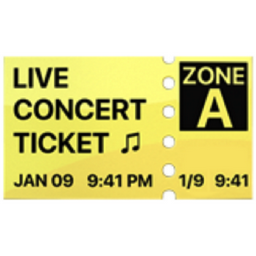
The ticket emoji is your digital “Admit One,” perfect for flexing that you scored concert seats, movie night plans, or entry to the hottest pop-up no one can actually find on Maps. It screams raffle vibes, giveaway hype, and that golden moment when the presale code finally works and you beat the bots. People drop it when announcing plans, teasing invites, or sarcastically handing out imaginary passes to the drama show—front row, popcorn not included.
On Apple/iOS, it looks like a golden-yellow stub with perforated edges and a bold star stamped in the center, angled slightly like it just slid across a box office counter. The shading gives it a soft 3D flair, evoking carnival booths, old-school theaters, and that ‘keep the stub’ nostalgia. It pairs beautifully with clapping hands for “I got in!” and with side-eye for “Congrats, you just won a ticket to Block City.”
Culturally, it taps into everything from Willy Wonka’s “golden ticket” fantasy to modern Ticketmaster-era chaos (queue PTSD, anyone?). It can be flirty—“one-way ticket to my heart”—or dramatic—“grab your ticket, the tea is about to be poured.” Whether you’re celebrating an IRL event, hosting a crafty raffle on Stories, or joking about the never-ending tour scramble, this emoji is the pass that says you’re on the list.
Definition
A ticket to an event, such as a rock concert, movie, or sporting event. Tickets are used to identify people that purchased or obtained proper admission to an event or place. The Apple version emoji is for the "John Appleseed World Tour" in Zone A on April 1st at 6:30. April 1st is also known as "April Fool's Day," a day where people play tricks on other people to fool them into believing something that isn't true. The Apple version also includes two Japanese ideographs, one that means "month" and the other "day."
Disqus Leave a comment!
Emoji History The emoji code/ image log of changes.
This emoji was part of the proprietary / non-standardized emoji set first introduced by Japanese carriers like Softbank. These emojis became part of the Apple iPhone starting in iOS 2.2 as an unlockable feature on handsets sold in English speaking countries.
In iOS 5 / OSX 10.7, the underlying code that the Apple OS generates for this emoji was changed.